

Hari Iyer | SyncEzy
CEO 5 Min Read
 Sep 15, 2025
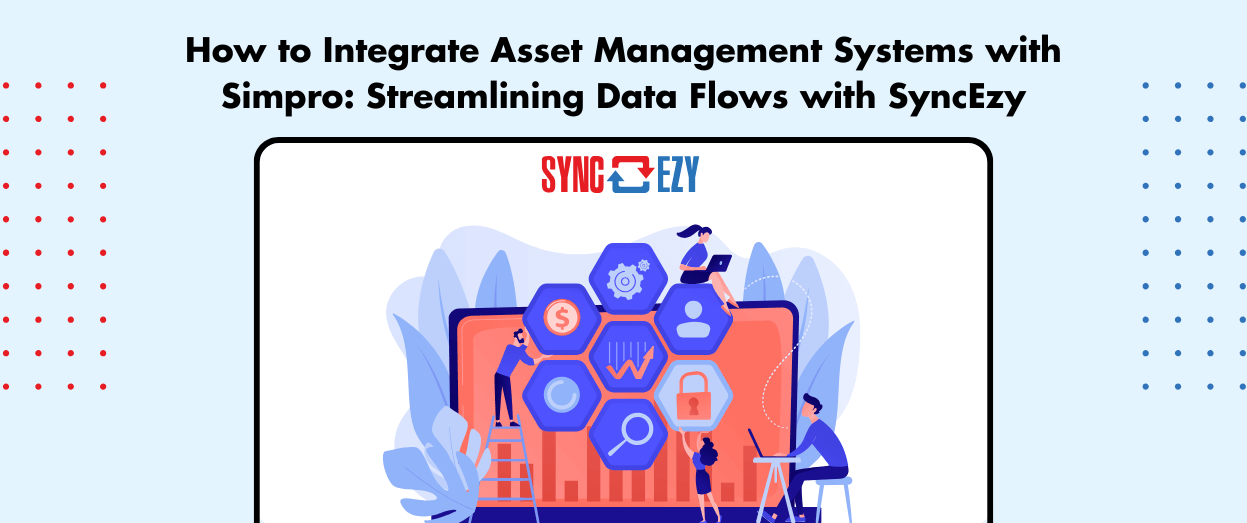
Managing thousands of assets across multiple locations is complex. Whether those assets are medical devices, field equipment, vehicles, or IT infrastructure, keeping track of maintenance schedules, expiry dates, SIM connectivity, and service records requires a system that can act as the single source of truth.For many companies, Simpro is that system — a powerful platform to manage assets, jobs, and service workflows. But what happens when the information you need sits in other platforms — such as cabinet monitoring systems, SIM management platforms, or specialized IoT services? That’s where SyncEzy comes in.
The Challenge: Fragmented Data Across Multiple Systems
Organizations often find themselves using several tools side by side:
- Asset monitoring platforms to track expiry dates of consumables such as pads and batteries.
- SIM management platforms (e.g., Jasper/Optus) to remotely activate, deactivate, or monitor connectivity for devices in the field.
- IoT cabinet management systems to monitor status indicators, such as lights or access logs.

Each system does its job well — but when they don’t talk to each other, teams are left manually re-entering data, chasing expiry dates, and juggling multiple logins. This duplication not only increases costs but also creates gaps where critical information can be missed.
Why iPaaS Tools Aren’t Enough
While generic iPaaS tools (like Zapier, Workato, or Make) can handle basic one-off data transfers, they’re not designed for the scale and reliability required in asset-intensive industries.
Asset management demands real-time synchronization, bulk data handling, and bi-directional workflows that can support thousands of records without breaking. These integrations need to be secure, auditable, and resilient against downtime — something that lightweight automation tools can’t guarantee.That’s where SyncEzy stands apart: we build robust, enterprise-grade integrations that are designed to handle high asset volumes and mission-critical workflows.
The Simpro-First Approach
One key lesson from real-world projects is that Simpro should act as the parent system — the single source of truth that pushes information downstream to other platforms.
Instead of trying to synchronize data in both directions (push/pull), SyncEzy designs integrations where Simpro holds the master record of each asset. From there, expiry dates, serial numbers, and service history can flow outward to connected systems. Or the initial import is done wen the external system is provisioned but after the creation simpro becomes the master. This approach reduces conflicts, simplifies governance, and ensures that reporting always matches what’s in Simpro.
In extreme cases where this isn’t possible, maybe due to the other system not having suitable API capabilities or it not being economical, there should be a fool proof way of making sure any change from the external system is fed back into Simpro.
Real-World Example: Defibrillator Asset Management
Consider an organization managing 10,000+ defibrillators and monitored cabinets across Australia and New Zealand.
- In Simpro: Each cabinet, defibrillator unit, SIM card, battery, and set of pads is tracked as an asset with its own service and expiry dates.
- In the SIM platform (e.g., Jasper): The company can remotely activate or deactivate cabinet SIM cards, ensuring connectivity only when needed.
- In the cabinet monitoring system (e.g., AVIA): Algorithms track when lights or other cabinet indicators require attention.
Without integration, teams would need to update all three systems manually. With SyncEzy, however:
- Simpro pushes asset data into the SIM management platform for activation/deactivation.
- Replacement alerts (14–30 days before expiry) can be automatically generated and logged in Simpro jobs.
- IoT data (e.g., cabinet status) can be connected back to asset records for full visibility.
This ensures that field technicians, service managers, and compliance officers are all working off the same dataset.
The Pilot-First Methodology
At SyncEzy, we know that large integration projects can feel daunting. That’s why we often recommend starting with a low-cost pilot or feasibility study.
- Scope & Access: We work with your team to define which systems should integrate, gather API documentation, and access sandbox environments.
- Proof of Concept: A pilot integration validates that the data can flow reliably from Simpro into your chosen systems.
- Commercial Flexibility: Pilot fees are credited toward the final project if you decide to proceed.
This phased approach gives stakeholders confidence while keeping initial investment low.
Why SyncEzy?
SyncEzy specializes in mile-deep integrations for asset-heavy industries. Unlike generic automation tools, our connectors are designed for enterprise-grade reliability, with features like:
- Robust API-level integrations with platforms like Jasper, AVIA, Procore, SharePoint, and more.
- Support for large asset volumes (10,000+ records).
- Automated alerts and workflows aligned with your business processes.
- Proven track record in integrating field service and IoT ecosystems with Simpro.
Bringing It All Together
Integrating asset management systems with Simpro isn’t just about reducing admin work — it’s about unlocking visibility across your entire operations.
From defibrillators in monitored cabinets to fleets of vehicles, any business that relies on asset uptime can benefit from centralizing control in Simpro and extending that control through SyncEzy’s integrations.
If your organization is juggling multiple platforms for asset management, it’s time to explore how SyncEzy can bring them together.
Author
Hari Iyer | SyncEzy
CEO

Hari Iyer is the Founder and CEO of SyncEzy, a pioneering company at the forefront of data integration and automation solutions. With a deep understanding of the power of technology and a passion for solving complex business challenges, Hari has emerged as a visionary leader in the industry. His relentless pursuit of excellence and commitment to delivering tangible results have earned SyncEzy a loyal global clientele.
He is not only a successful entrepreneur but also an active contributor to the technology community, sharing his insights through thought leadership articles, speaking engagements, and mentorship programs. Hari’s ability to navigate the complexities of remote work serves as an inspiration for leaders, highlighting the importance of flexibility, work-life balance, and a results-oriented approach in today’s evolving work landscape.
Under his guidance, SyncEzy has gained widespread recognition for its deep integration solutions that seamlessly connect software applications, eliminate data silos, and enhance operational efficiency.
When not working, Hari is trying to be a better father, reading tech news, playing FPS games, and not exercising as he should.

Related Posts
Tags
Categories
From Timesheet Ritual to Pay Run: How Australian Trades Are Syncing Simpro and Employment Hero
Ask an Australian trade business owner about Simpro and they’ll tell you it runs their operation. Jobs, scheduling, technicians in the field, hours logged against cost centres. It does that well. Ask them about Monday morning, when those field hours have to become an actual pay run, and the tone changes. That’s where the stress… Continue reading From Timesheet Ritual to Pay Run: How Australian Trades Are Syncing Simpro and Employment Hero
Hari Iyer | SyncEzy
CEO
One Pay Run, No Excel: How NZ Trade Businesses Are Syncing Simpro and Employment Hero
Most New Zealand trade businesses we talk to don’t have a payroll system problem. They have a gap problem. Simpro runs the jobs. Your technicians log their hours against jobs, cost centres, activities and allowances. Employment Hero runs the pay. It knows the Holidays Act, it knows KiwiSaver, it knows what the IRD expects. Both… Continue reading One Pay Run, No Excel: How NZ Trade Businesses Are Syncing Simpro and Employment Hero
Hari Iyer | SyncEzy
CEO
No More Re-Keying: Why Trade Businesses Are Syncing Simpro and HubSpot Live
Most trade and field service businesses we talk to don’t have one big, dramatic CRM problem. They have a quiet, persistent one. The sales team builds the pipeline in HubSpot because that’s where the marketing leads land, and the nurture sequences run. The operations team runs jobs in Simpro because that’s the system designed for… Continue reading No More Re-Keying: Why Trade Businesses Are Syncing Simpro and HubSpot Live
Hari Iyer | SyncEzy
CEO
Stop Entering Timesheets Twice: How Simpro + QuickBooks Time Eliminates Manual Payroll Work
If your team is still managing timesheets across two separate systems, you’re losing hours every payroll cycle to manual entry, reconciliation, and approval workflows that could be automatic. We built the Simpro + QuickBooks Time integration to solve exactly that problem. In this post, we’ll walk through how the integration works, why it matters, and… Continue reading Stop Entering Timesheets Twice: How Simpro + QuickBooks Time Eliminates Manual Payroll Work
Hari Iyer | SyncEzy
CEO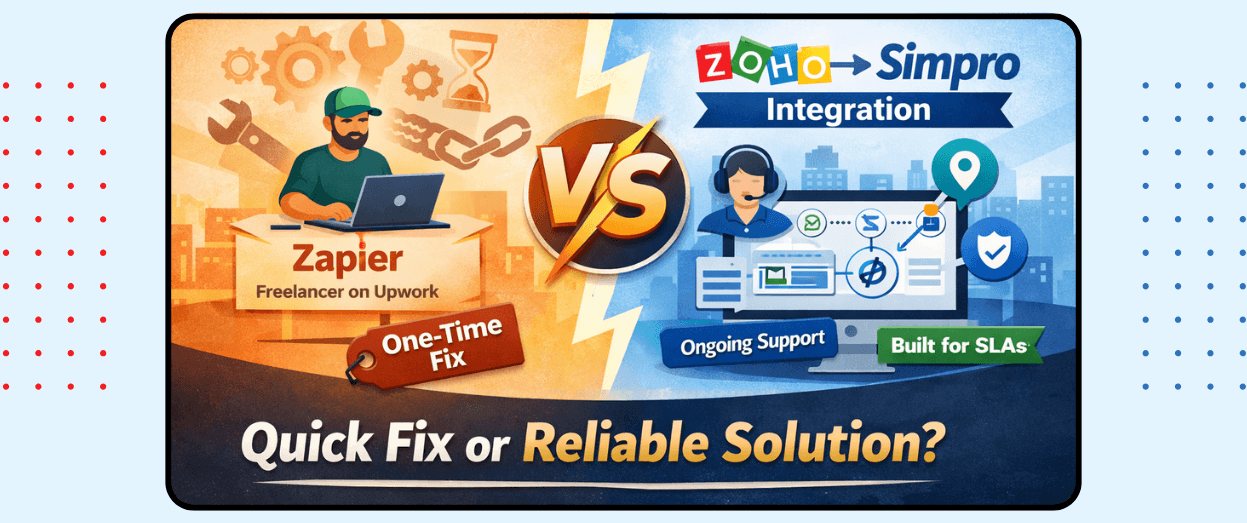
Zapier vs a Purpose-Built Zoho Desk–Simpro Integration: What’s Actually Cheaper?
A prospect recently asked us a very fair question: “Why would we pay for your Zoho Desk–Simpro integration instead of just hiring a Zapier developer on Upwork as a one-time cost?” If you’re evaluating integrations, this is exactly the right question to ask. Here’s the honest, practical answer. DIY Automation vs Business-Critical Integration At first… Continue reading Zapier vs a Purpose-Built Zoho Desk–Simpro Integration: What’s Actually Cheaper?
Hari Iyer | SyncEzy
CEO
Simpro–SharePoint Integration Webinar : Streamlining Document Management
In this webinar, the Simpro and SyncEzy teams walk through how businesses can seamlessly integrate Simpro with Microsoft SharePoint to simplify document management, reduce double handling, and improve visibility across projects and service jobs. What you’ll learn Real customer insights Jack Holloway, General Manager at Specialized Tank Services (VIC), shares how the integration helped his… Continue reading Simpro–SharePoint Integration Webinar : Streamlining Document Management
Hari Iyer | SyncEzy
CEO

