

Hari Iyer | SyncEzy
CEO 4 Min Read
 Nov 12, 2026
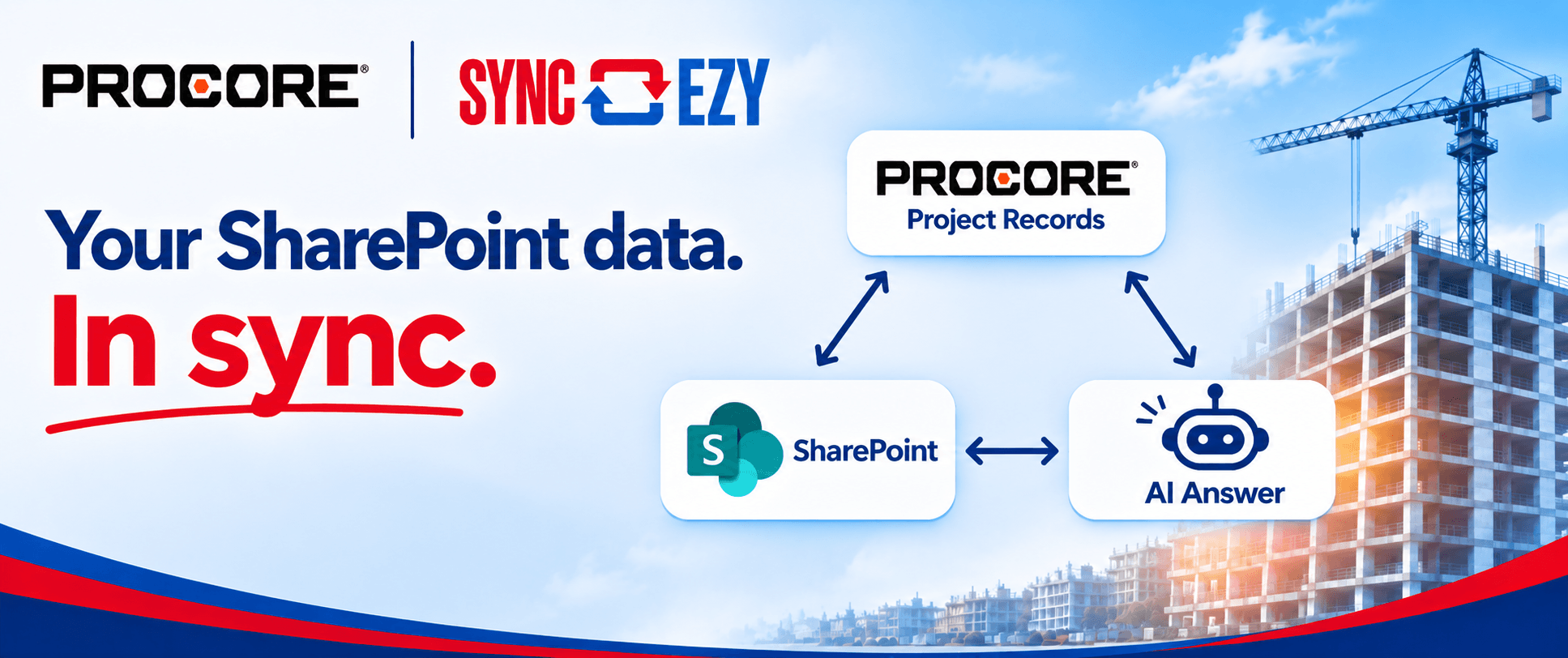
Procore has published a benchmark for its construction AI, and the most useful line in it isn’t the score. It’s the pass rule. In a 22 October post, Procore’s SVP Data / AI, Thiago da Costa, explains that the primary metric is Task Success Rate, and that “a task only passes if it is correct and supported by the project record.”
Procore reports that its Magpie 3.0 model achieved an 81 per cent task success rate across more than 200 real-world tasks, 35 percentage points ahead of the closest general-purpose frontier model. The task scenarios, rubrics and ground-truth answers were independently reviewed by Thomas Kommer of the California Center for Construction Education at Cal Poly, San Luis Obispo. These are Procore’s own figures from its own benchmark, updated from the early preview it shared at Groundbreak 2026, and Procore says the full results and methodology will follow.
We’re not here to weigh in on models. What interests us is the second half of that pass rule. “Correct” is the model’s job. “Supported by the project record” depends on something simpler: the record has to be there.
The records that live somewhere else
On most construction projects, the project system isn’t the only place project records live. A few that commonly sit outside it:
- Contract variations approved and costed in the accounting package, but never attached to the matching change event in the project.
- Handover and closeout documents stored in a SharePoint library set up for the client or the facilities team, and never synced back.
- Correspondence and RFIs that started in email and were filed in a shared drive rather than the project.
- Subcontractor compliance records, such as insurance certificates, licences and inductions, held in a separate safety or HR platform.
None of these are mistakes. Each system is doing the job it was bought for. Finance works in the accounting package, the client wants documents in their own SharePoint, and the safety team has its own platform. The gap only shows up when someone asks a question that spans them.
Procore’s post notes that “over 90% of construction data is trapped in unstructured formats.” Some of that data is trapped inside documents. Some of it is trapped in a different system altogether.
What keeping them in step does for an answer
Picture a project manager asking, “Has the variation for the level 3 slab been approved, and what did it cost?” If the approval and the final figure sit in the accounting package, an AI working across the project record has two options. It can say it doesn’t know, which is honest but unhelpful. Or it can answer from what it can see, perhaps an earlier quote or a draft, which is worse, because now the answer looks supported when it isn’t.
Under a pass rule like Procore’s, neither counts. On site, neither helps.
When the records are kept in step, the same question has somewhere to land. The approved variation is in the project, linked to the right change event, with the source document attached. The answer can point to it, and someone can click through and check. That’s the real value of an answer that cites its source: a person who doesn’t yet trust the machine can verify it.
An integration won’t make any model smarter. What it does is make sure the record is complete when the model goes looking.
That’s the work SyncEzy does. We’re an integration company; that’s all we do. We’ve been a Procore partner since 2019, and our Procore SharePoint integration keeps project documents in step between the two, in the background. It runs in your own SharePoint tenant, and we hold metadata only, never your documents. [CHECK: which other Procore integrations to name, e.g. accounting or ERP, and sync direction for each]
Before you lean on any AI for project answers, three questions are worth asking:
- Where do approved variations end up, and is the final version in the project?
- When documents are handed over to a client’s SharePoint, does anything flow back?
- If someone asked your project system a question today, which records would it never see?
Models improve with every release. The record only improves if someone keeps it complete. If you’d like to see what that looks like on your own projects, a free trial on a couple of projects can run alongside what you do today: book a time.
Author
Hari Iyer | SyncEzy
CEO

Hari Iyer is the Founder and CEO of SyncEzy, a pioneering company at the forefront of data integration and automation solutions. With a deep understanding of the power of technology and a passion for solving complex business challenges, Hari has emerged as a visionary leader in the industry. His relentless pursuit of excellence and commitment to delivering tangible results have earned SyncEzy a loyal global clientele.
He is not only a successful entrepreneur but also an active contributor to the technology community, sharing his insights through thought leadership articles, speaking engagements, and mentorship programs. Hari’s ability to navigate the complexities of remote work serves as an inspiration for leaders, highlighting the importance of flexibility, work-life balance, and a results-oriented approach in today’s evolving work landscape.
Under his guidance, SyncEzy has gained widespread recognition for its deep integration solutions that seamlessly connect software applications, eliminate data silos, and enhance operational efficiency.
When not working, Hari is trying to be a better father, reading tech news, playing FPS games, and not exercising as he should.

Related Posts

Tags
Categories

Groundbreak Wrap Up 2026 – What you need to know
Most Procore teams still keep project files in more than one place.Ask where the latest drawing lives and the honest answer is often “Procore, and also SharePoint, and also a few desktops”. It was the most common answer we heard at Procore Groundbreak 2026 in Orlando, and it’s costing teams more time than most of… Continue reading Groundbreak Wrap Up 2026 – What you need to know
Hari Iyer | SyncEzy
CEO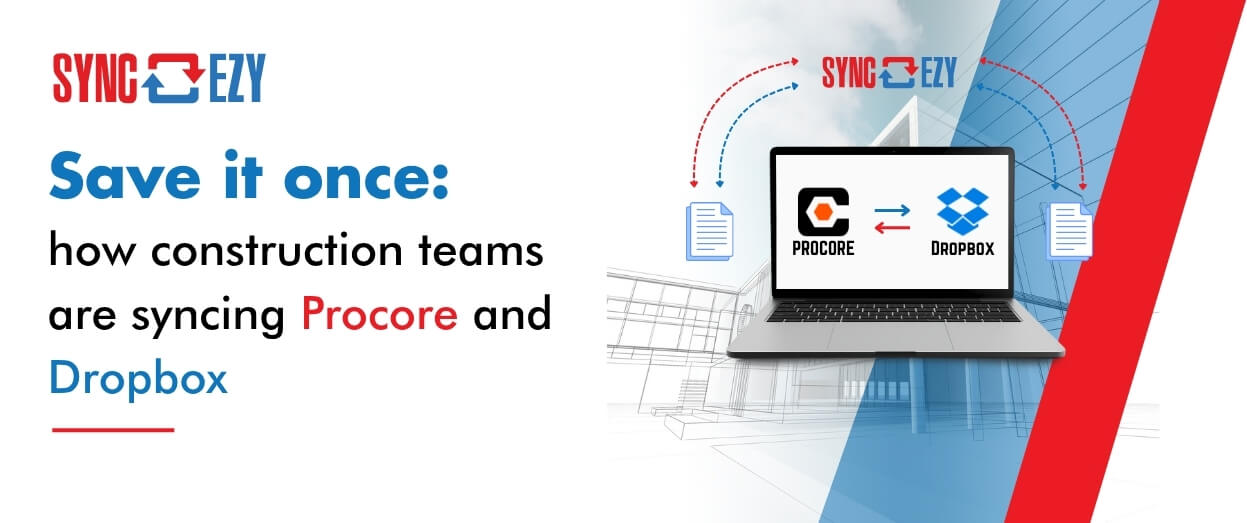
Save it once: how construction teams are syncing Procore and Dropbox
Most construction businesses we talk to that run Procore alongside Dropbox don’t have a systems problem. They have a gap problem. Procore runs the projects. It’s where the documents that govern the job live — drawings, contracts, the current revision of everything. Dropbox runs the business. It’s where the wider organisation actually works day to… Continue reading Save it once: how construction teams are syncing Procore and Dropbox
Hari Iyer | SyncEzy
CEO
Procore + Google Drive integration: what syncs and what doesn’t
A lot of construction teams are split. Procore runs the project. Google Drive runs everything else: pre-construction, estimating, design collaboration, internal documents. The two systems don’t talk to each other, so documents get manually copied across, or they don’t, and someone ends up working from an outdated file. The SyncEzy Procore Google Drive integration connects… Continue reading Procore + Google Drive integration: what syncs and what doesn’t
Hari Iyer | SyncEzy
CEO
Procore attachments now sync to SharePoint, not just the PDF
If you’ve ever tried to assemble a project closeout package from SharePoint, you’ll know the gap we just closed. The Procore to SharePoint integration now syncs the attachments on your RFIs, Submittals, Commitments, Forms, Inspections, and Observations, not just the generated PDF. The files live in a folder next to the PDF, so the whole… Continue reading Procore attachments now sync to SharePoint, not just the PDF
Hari Iyer | SyncEzy
CEO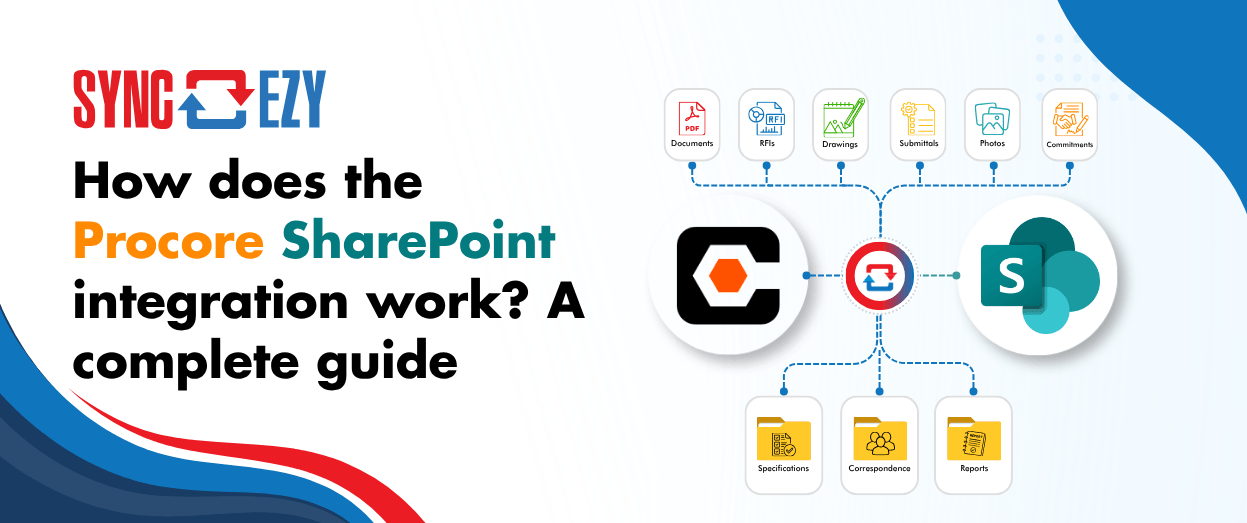
How does the Procore SharePoint integration work? A complete guide
If you’re running Procore on the project side and SharePoint (or OneDrive) on the business side, you’re probably managing a version problem. Documents live in both places, and at any given moment you’re not certain which one is current. Field teams work in Procore. Office teams work in SharePoint. Someone always ends up uploading the… Continue reading How does the Procore SharePoint integration work? A complete guide
Hari Iyer | SyncEzy
CEO
Stop Chasing Documents: How Procore and Box Sync to Become a Single Source of Truth
Most construction and field-services businesses we talk to don’t have one big, dramatic document problem. They have a quiet, persistent one. The site team works in Procore, because that’s where the project lives. The office team works in Box, because that’s where the company’s documents live. And somewhere in the middle sits a person, or… Continue reading Stop Chasing Documents: How Procore and Box Sync to Become a Single Source of Truth
Hari Iyer | SyncEzy
CEO

